There is a man I have been dreaming about since I was a child.
He is older, bearded, and radiates something I can only call a “divine hush”. A stillness that doesn’t mean peace so much as it means I have seen everything, and I am still here. In the dream he never spoke. He didn’t need to. He was simply present in the way that a lighthouse is present: not saving you exactly, but making sure you could find your way.
I am fifty years old. He came back.
And then I found a photograph of my great-grandfather, a man I had never met, never seen a picture of. Same beard. Same eyes. Same ancient, unshakeable quality. The dream and the bloodline had somehow been speaking to each other across decades, waiting for me to catch up.
So I started making art of him. His face. His presence. The Protector. My protector.
I am, I’ll admit, a little obsessed.
When I made the first piece, I pressed his face into paint on raw, textured surface and laid gold leaf behind him in a wide circle — not a crown, not a halo in the clean religious sense, but something older and less certain. Lunar, almost. The gold is worn and cracked the way real things are worn and cracked. And he doesn’t float above the darkness. He rises out of it. His face emerges from shadow into that imperfect gold like something being slowly revealed rather than displayed. Like a thing that was always there, just underneath.
That image. The emergence, not the arrival, turned out to be the whole idea.
Two Kinds of People Will Find This Work
The first group already knows. They’ve been through the fire. The dissolution, the collapse, the night that had no floor. They did the shadow work. They sat with the parts of themselves that were ugly and frightened and they did not look away. They alchemized. They came out the other side not unscathed but transformed, which is a different thing entirely from being okay.
For them, the Protector is a homecoming. A mirror. A reminder that the force that carried them through the worst of it was real, and is still real, and lives somewhere in the lineage of the body and the blood and the accumulated grief of every ancestor who survived something unsurvivable. They will look at his face rising from that dark into imperfect gold and recognize it immediately — not with their eyes but with something lower and older than that. They will want this on their wall. They will understand why the halo isn’t clean. Why the surface is rough. Why he doesn’t come from above the darkness but through it.
The second group is harder to talk about
The Gift That’s Also a Curse
Here’s the uncomfortable truth about healing: sometimes when you wish it for someone, what you’re actually wishing them is suffering. Not because you’re cruel, but because you understand the way only people who have already been leveled understand, that the healing doesn’t come before the break. It comes after.
There’s a card in the tarot called the Tower. It shows a tall structure being struck by lightning, people falling from it, fire at the top. Most people find it alarming. People who’ve lived through a Tower moment (or many!) recognize it immediately and feel something closer to relief.
The Tower doesn’t mean catastrophe in the sense of punishment.
It means the collapse of a structure that was never sound to begin with. The false self. The life that was built on what other people needed you to be. The emotional labor you were quietly performing for everyone around you who couldn’t or wouldn’t do it themselves.
And here is the part people who love someone on the precipice understand with a kind of sorrowful clarity: when others stop doing that work for someone; stop containing their emotions, stop softening every edge, stop making themselves smaller so someone else doesn’t have to grow, that person falls. They have to. There’s nothing left to hold the structure up.
Bless Your Heart
In the American South, bless your heart is a phrase that operates on two registers simultaneously. On the surface it’s warm, even tender. Underneath, it means: oh, honey. You have no idea what’s coming.
That is what it feels like to hand one of these paintings to someone who hasn’t yet been through it.
It is given with love. Completely, genuinely, with love. And it is also an omen. It is saying: I can see the cracks you can’t see yet. I can see the tower you’ve been living in. And I want you to have this face, this steady, ancient, bearded face emerging from the dark for when the lightning comes. Because it is coming. And there is nothing I can do to stop it for you, and nothing I should do, because the other side of it is the most important place you’ll ever stand.
That’s the curse part. To know. To love someone anyway. To hand them something and think, quietly, in the language underneath language: you’re going to need this.
What the Protector Actually Is
He is not a promise that nothing bad will happen. He is not a shield in the sense of prevention.
Look at the painting again. He doesn’t descend from light. He rises from darkness into it — imperfect, worn, textured gold that looks like it has been carried through something. That’s not an accident. That’s the whole theology of this, if you want to call it that. He has already been through the dark. He knows it. He is made of it, partly. And the gold behind him isn’t reward or rescue. It’s what’s on the other side of the going-through.
He is the thing that survives. The part of you — inherited, ancient, maybe ancestral — that was present before the story you built around yourself, and will still be present after that story burns down. He is the protector in the truest sense: not the one who keeps you from the fire, but the one who walks in with you and stays.
The people who’ve been through it know him. They recognize his face the way you recognize a face from a dream; not in the rational mind but somewhere lower, somewhere older.
The people who haven’t been through it yet will look at him and feel, perhaps, a faint inexplicable comfort they can’t quite explain.
That’s him. That’s already him, working.
This work is for everyone. But it means something different depending on where you stand in your own becoming.
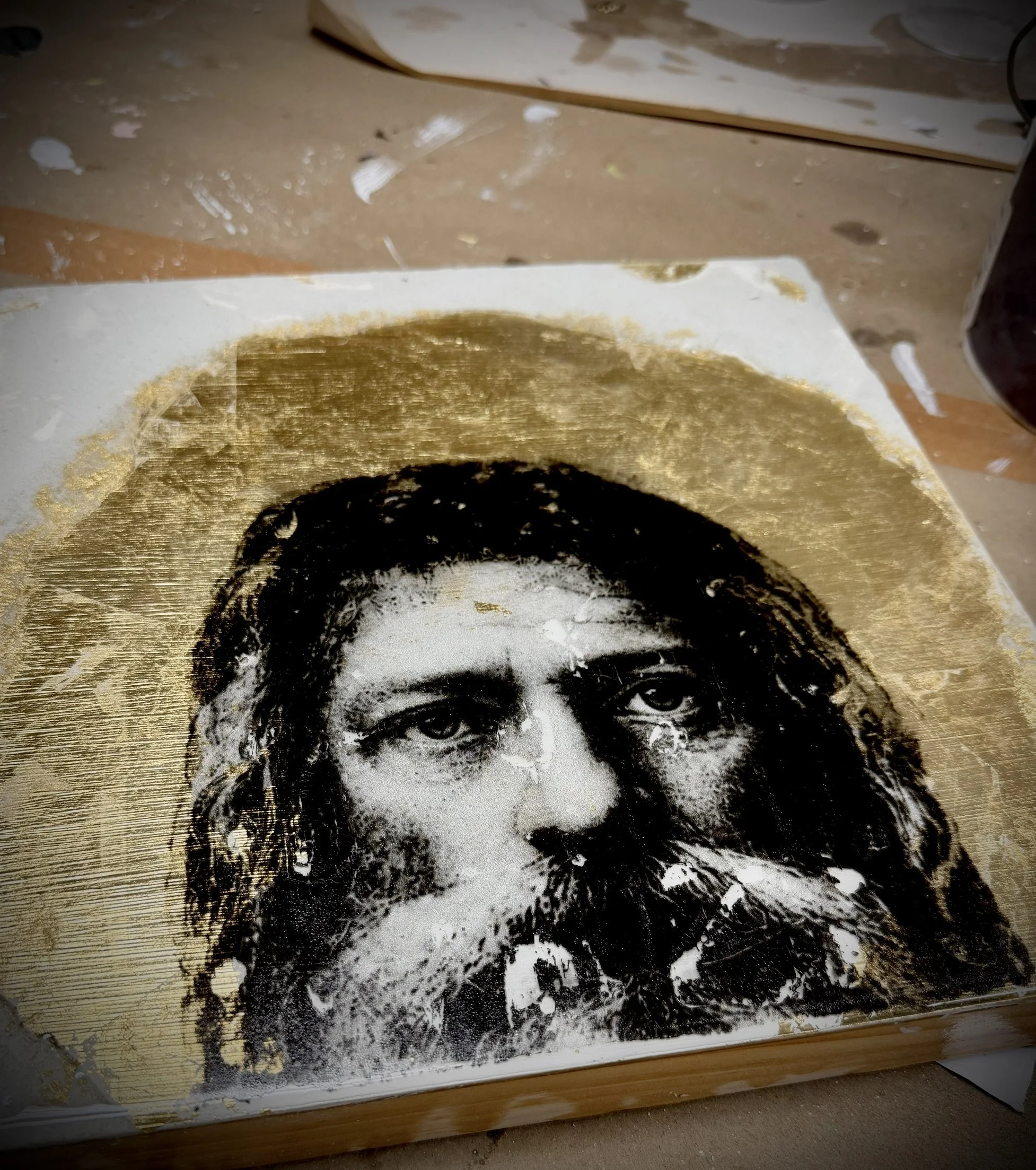
Joseph, The Protector - Experimentation phase July 2026